Kali Santarana
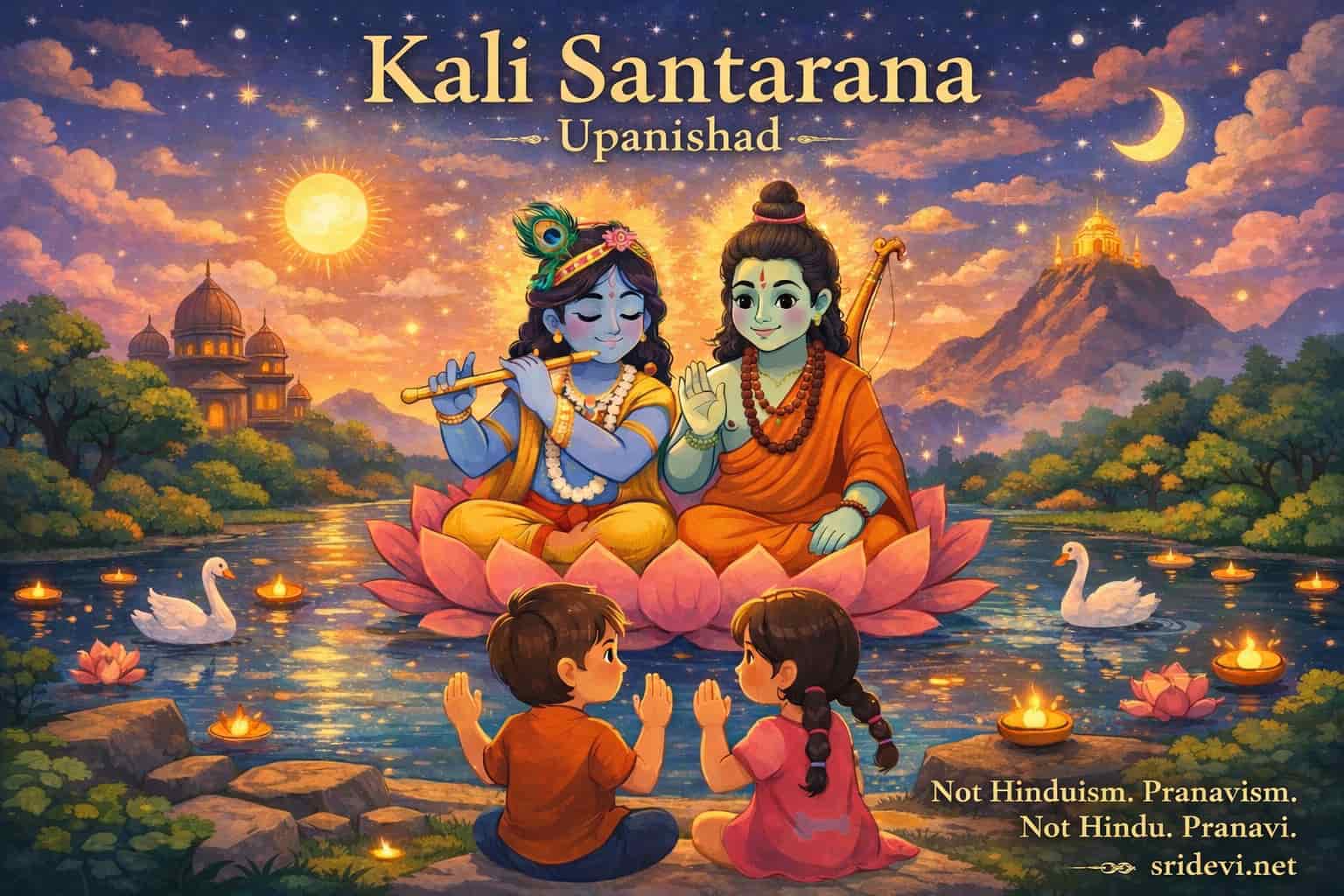
Scripture: Kali Santarana Upanishad.
Canonical Number: 103 out of 108.
Shanti Mantra: Saha nāvavatu.
Interlocutors: Narada. Brahmā/Hiraṇyagarbha (teacher).
Context, Setting, Timeframe: End of Dvāpara; onset of Kali.
Theme:
Harē Rāma Mahā-Mantra
Teachings:
How can one transcend the influences of Kali Yuga?
Here is the hidden essence of all scriptures — the direct means to transcend saṃsāra, the cycle of existence. The mere utterance of the name of Nārāyaṇa — Ādi Puruṣa, the primordial divine masculine — dispels the influence of Kali Yuga.
Which name of Narayana?
Not just one divine name, but a mantra of sixteen names:
Harē Rāma, Harē Rāma,
Rāma Rāma, Harē Harē;
Harē Kṛṣṇa, Harē Kṛṣṇa,
Kṛṣṇa Kṛṣṇa, Harē Harē.
These sixteen names destroy the kalmaṣa (impurities) of Kali Yuga. There is no means superior to this anywhere in the Vedas. When the ṣoḍaśa kalās — the sixteen layers veiling the soul (jīva) — are dissolved, the Inner Divine shines forth, just as the sun reveals itself when clouds disperse.
Is there any procedure?
There is none.
Regardless of one’s mental state or physical condition, anyone who continually recites attains:
- Sa-lokatā — residence in a divine mental realm
- Samīpatā — nearness to the divine
- Sa-rūpatā — likeness to the divine
- Sāyujyatā — complete union with the divine
When this set of names is chanted over an extended period, negative karma begins to dissipate, and the path to liberation opens.