Shiva Linga: The Deeper Symbolism
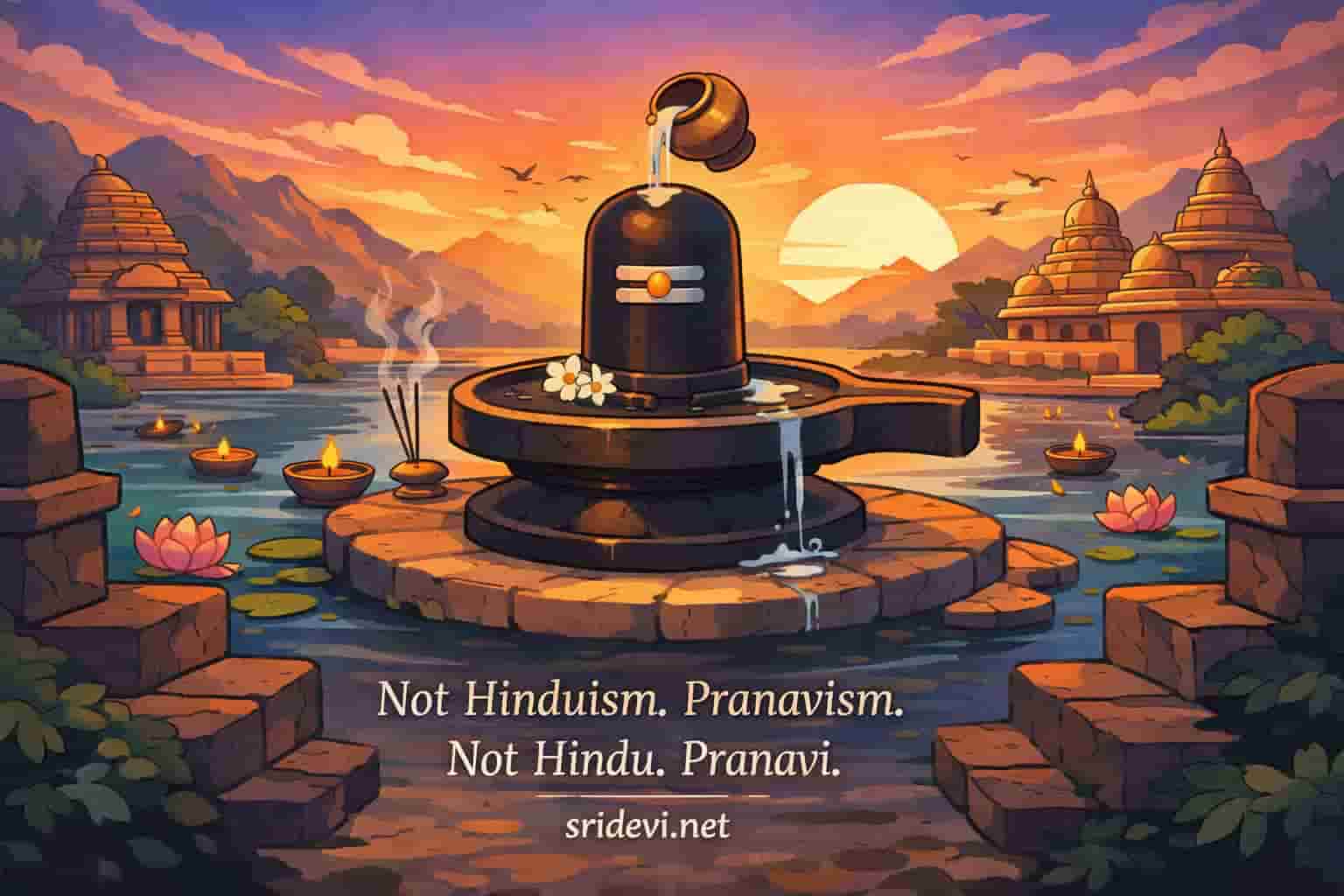
For centuries, the Shiva Linga has fascinated scholars and seekers alike. What’s remarkable is that each time you reflect on it, a new layer of meaning seems to unfold. A single symbol carrying so much depth — it’s absolutely worth pausing over.
Linga & Yoni — The Origin
We see two structures in a Shiva Linga: an oval or circular base called the Yoni, and an upright pillar called the Linga. At the most visible level, these denote reproduction, our origin.
In modern times, sexuality is often spoken about in hushed tones, almost as if it were something shameful. But that wasn’t the worldview of the ancient sages. To them, it was divine — not cringeworthy, not taboo. It was the very source of life.
How could the source of life ever be considered impure?
Of course, the sages also emphasized balance. Anything — even something healthy — becomes harmful in excess. Just because protein is good for you doesn’t mean you eat only protein. Similarly, life is harmonious only when lived in moderation, and the same principle applies to physical intimacy.
And one thing was always clear: crime was never justified. Consent mattered then as much as it does now. Forcing intimacy — regardless of gender or relationship — is a violation, and no genuine sage would’ve ever supported that.
Beyond the Sexual Lens
For a long time, the Shiva Linga was interpreted only through a sexual lens. Swami Vivekananda — revered by many as an embodiment of Shiva Himself — offered a deeper insight that shifted this narrow view.
Yoni represents the Source: dense, unmanifested energy. Just as a child emerges from its mother’s womb, the divine energy of creation arises from the Source. The Linga or pillar denotes this manifested energy of creation, which bursts forth like a gentle explosion.
In simpler terms, creation is not merely physical; it is cosmic.
This understanding aligns with Pranavi philosophy, and specifically, the Sri Vidya tradition.
Sri Vidya & the Sri Chakra
In Sri Vidya, the Shiva Linga can be seen as a derivative of the central cross-section of the Sri Chakra. Especially in the 3D shape of this geometric design, known as the Meru.
- The central point (bindu): It represents the subtle union of Yoni and Linga; think of it as potential energy being converted into kinetic energy of creation.
- The first layers of triangles: It is the tangible union of masculine and feminine principles, which denotes the formation of this universe.
Shiva is regarded as the Guru of the Sri Vidya tradition. So, it’s fitting that His symbol reflects the core of the Sri Chakra — the heart of this cosmic geometry itself.
Furthermore, in Sri Vidya, the Yoni is revered as Sri or Prana — the Life Force. And the Linga is Om or Pranava — the Manifestation. The two most auspicious terms of this tradition.
Water Poured on Shiva Linga
Shiva is often described in scriptures as Agni or Ugra — fiery and intense, charged with the heat of spiritual discipline and mantra practice.
To balance this intensity, He is said to have dwelt in the coldest regions. But as his symbol traveled with devotees, a ritual emerged: pouring water over the Shiva Linga to “cool” Shiva.
Over time, this may have evolved into Abhishekam — a worship ritual that also serves as a symbolic reminder for spiritual practitioners: to stay physically hydrated during intense practices.
Conclusion
The deeper you look into ancient symbols, the more wisdom they reveal. A single form can carry layers of psychology, cosmology, spirituality, and practical life guidance.
Sometimes I wonder what it would have been like to sit with those ancient sages and hear these insights directly. Well, we can’t do that — but thankfully, they left behind enough symbols and scriptures to keep us reflecting for lifetimes.