Adaptation: When She Becomes “Too Strong”
Years ago, a monk — who later became a close friend of mine — visited my home. It was an intimate setting: just my family of three, and a couple of people who had accompanied him.
After spending quite a while with us, the monk sang a song about Draupadi.
It was a simple devotional performance; he was not a particularly talented singer, though I admire his confidence. Yet something unusual happened as I listened.
In the way the song was sung, in its tone and presentation, it felt as though the message was being directed straight at me.
Perhaps Too Strong?
At that time in my life, I was struggling. Not because I had made a mistake; though I often did, like anyone else. This time, it wasn’t simply about me. It wasn’t because I had acted without integrity.
It was because many around me did not quite know how to deal with a woman who was strong… perhaps a bit too strong.
The resistance was subtle, yet persistent. Reactions. Judgments. Loud whispers meant to reach my ears indirectly.
Maybe that is why the monk’s song stayed with me. It felt like a quiet affirmation — a reminder that a woman’s strength does not need correction. Sometimes it is the world that needs to listen to her perspective and change.
The World Needs Adjustment
Today, we are witnessing something historically significant. It is not fully there yet, but it has certainly begun. Women across the world have started reclaiming their voice, their autonomy, and their right to define themselves.
Societies that spent centuries building norms around compliant women are now trying to adjust and accommodate empowered women.
This adjustment, however, is proving complicated.
The issue here isn’t empowerment itself; it is adaptation. This may not be a crisis per se, but it is certainly a renaissance of sorts — many minds grappling with changing power dynamics.
Time to Empower Men?
This change is often cited as a saga of women’s empowerment. But perhaps there’s another dimension that deserves attention. Maybe it is also time to empower men.
Not to fight with more authority or cling to old patterns with women… but to become more gentle and engage with her with clarity.
For instance, my husband once had a chat with my son about how a woman’s body goes through the struggles of menstruation and how PMS can be devastating. And I instantly noticed a new gentleness in the way my son addressed me. His understanding had changed something at a subconscious level.
For generations, many men were taught an incomplete picture of women. Now we need men to raise boys differently — as my man did.
Adaptation, Both Ways
Even though I speak here about men and women, I extend this reflection to other genders. We must all learn that strength and authority do not belong to one person — certainly not to one gender alone.
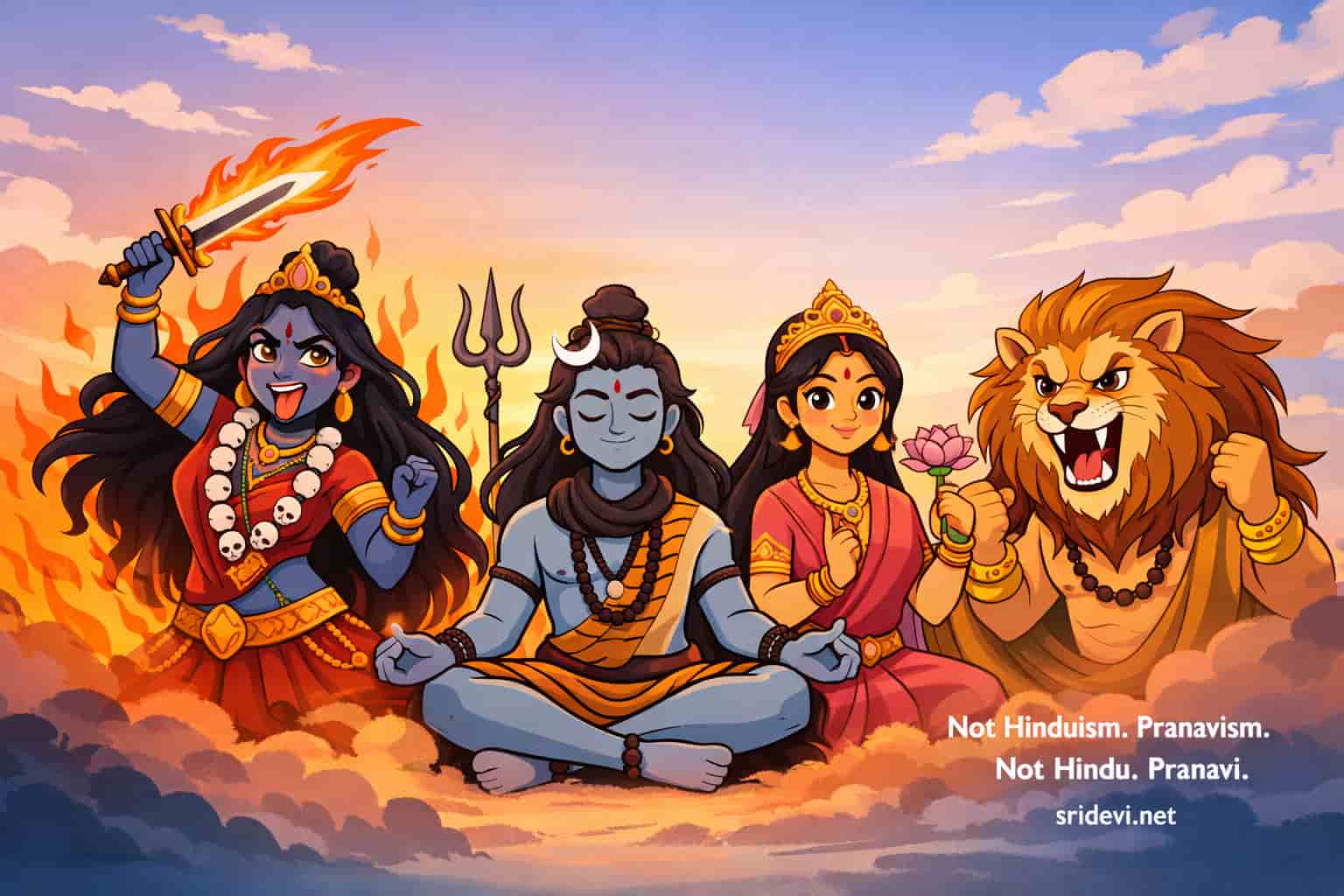
When a woman goes through situations that awaken the fierce Kali within her, the man beside her must become the gentle Shiva. When a man becomes the uncontrollable Narasimha because of his circumstances, the woman beside him must be the understanding Lakshmi.
Authority is unavoidable, but it must be cyclical, not absolute. That to me is what “being strong” truly means: it’s all about adaptation.
When empowerment is misunderstood, it often turns into rivalry and competition. Strength, though, lies not in dominance or submission, but in partnership. And it all begins with one understanding: the divine resides in all — within every gender, and beyond.