Helike: Gone in a Swoosh
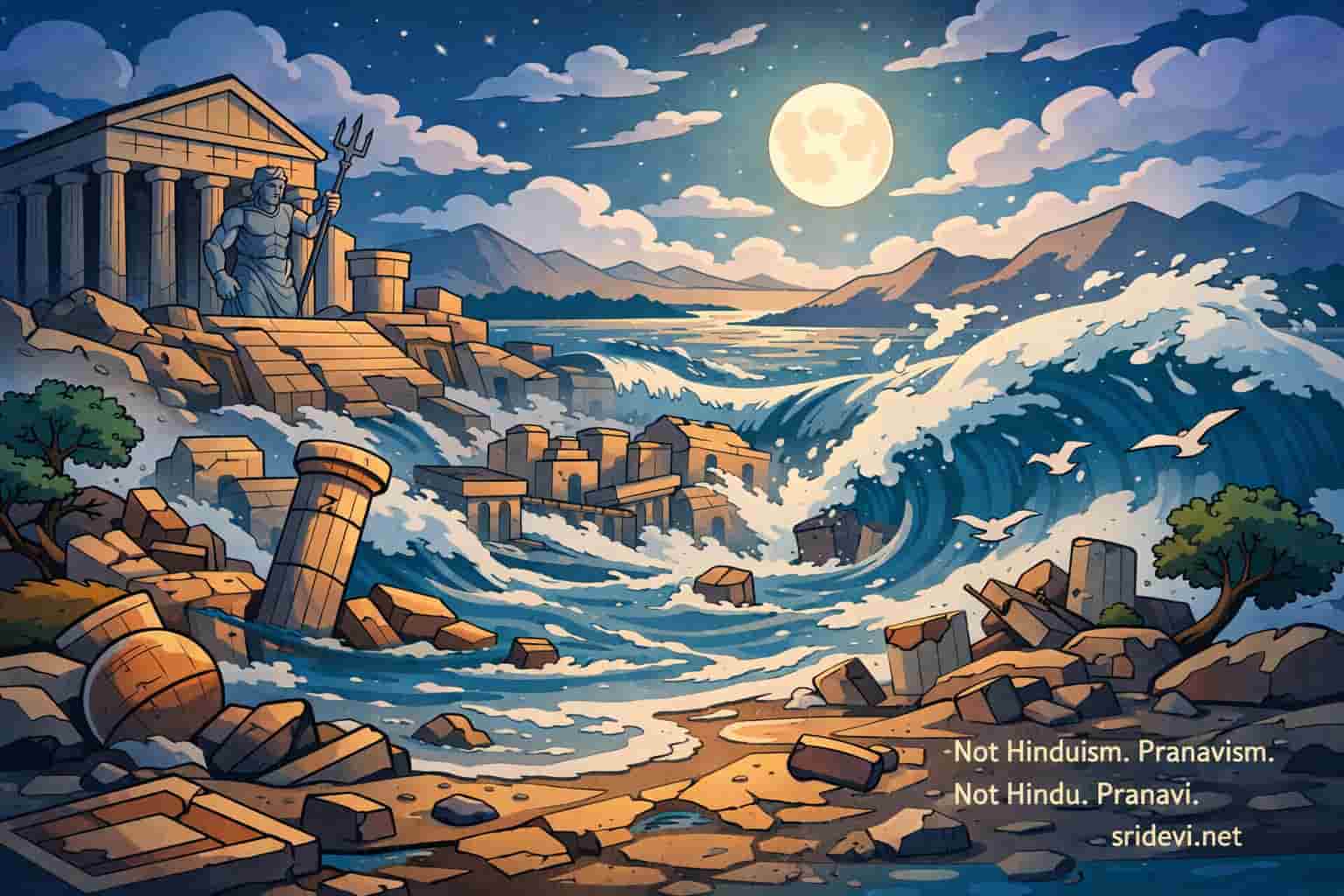
In ancient Greece, Helike was a powerful and flourishing pilgrimage center, home to a celebrated temple of Poseidon, the Lord of the Sea and Earthquakes.
Helike’s identity was inseparable from devotion. In 373 BCE, this city met a tragic — and deeply ironic — end. It disappeared overnight.
The Search for a Lost City
Ancient accounts claimed the sea had swallowed Helike. For centuries, archaeologists searched the seabed of the Gulf of Corinth. Yet Helike remained missing.
The breakthrough came from a girl who had grown up with the legends and later became an archaeologist. Revisiting historical texts and folklore with a local eye, she proposed a different theory:
Helike had not been lost to the sea, but to a lagoon whose course later shifted and eventually dried up.
Excavations moved inland. And beneath thick layers of sediment, Helike was finally uncovered.
What Destroyed Helike?
Geological evidence suggests that a powerful earthquake triggered soil liquefaction. In other words, the ground lost its solidity and water surged upward. A tsunami from the nearby lagoon compounded the devastation, and the city was gone in a matter of hours.
What intrigues me, however, is the darker dimension preserved in ancient tradition. According to one account:
Shortly before the earthquake, visiting pilgrims questioned certain secret temple rituals and were reportedly killed for doing so. Mercilessly, in the name of faith. Soon after, the city itself was destroyed by the very elements associated with Poseidon: water and earthquake.
Fanaticism Is Not Faith
Whether this account is history or a moral allegory is debatable. Still, the symbolism is striking.
A community fiercely protective of ritual, devoted to a deity of the sea, destroyed by the very force that deity embodied.
Helike’s ruins leave us with two reflections:
- Faith is not the same as fanaticism.
- Life is so fragile that nature can erase it in a single night.
It is, after all, a short life. In this, faith should be a guardrail — something that elevates human consciousness. But when it turns rigid and intolerant, it hardens into something destructive.
Then a question arises: do we really need rituals that diminish rather than uplift humanity?
That’s a question each of us, especially those who consider ourselves faith-oriented, must honestly ponder upon.