Pranavism: A Personal Clarification
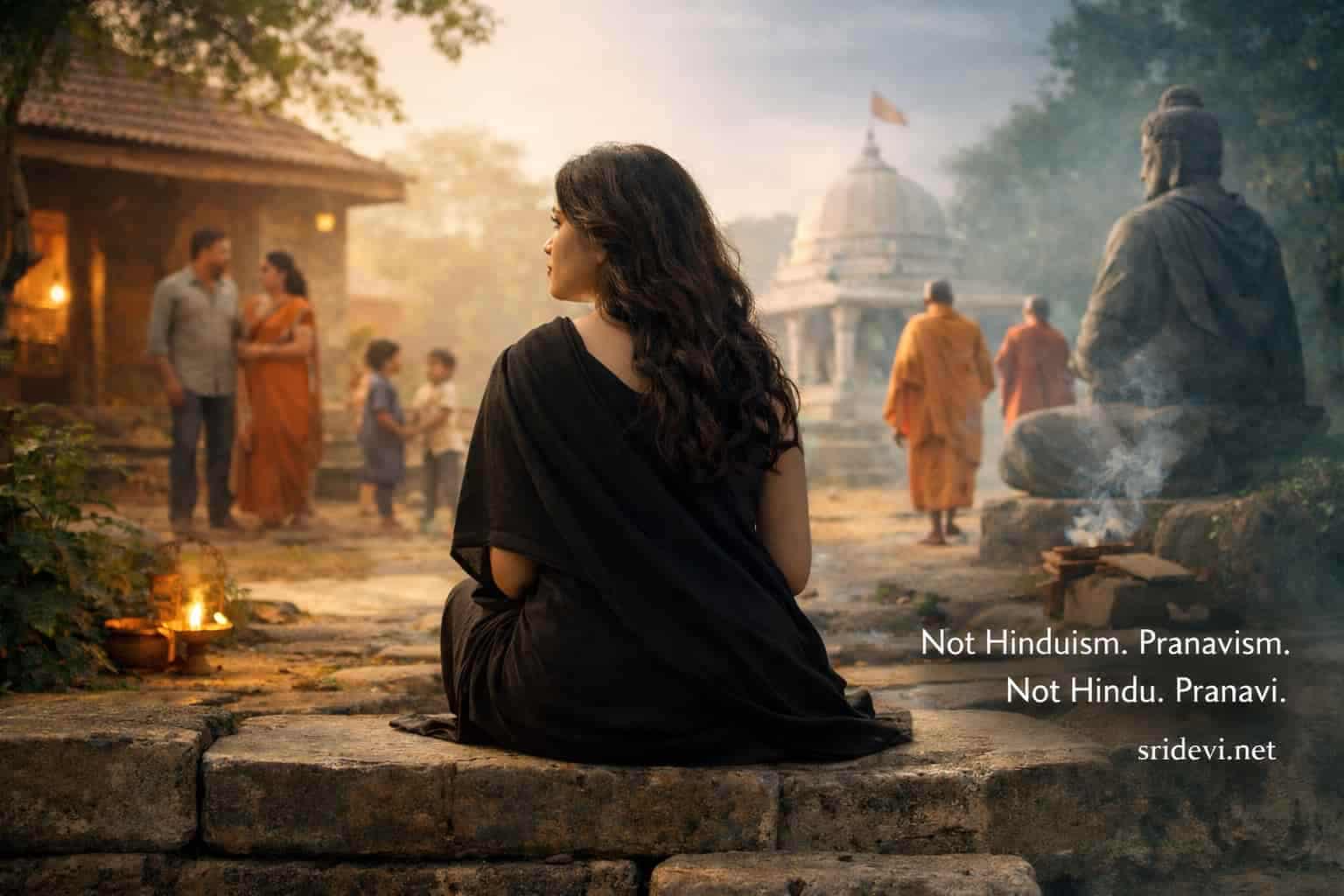
To begin with, I have never asked anyone to adopt any particular belief or practice. Each individual is free to follow their own path, and this reflection is simply about my choice.
I practice Pranavism. And what I express here arises from my experience and observation, not from ideology or hostility.
Over time, I have developed a discomfort with religious institutional structures; the ones I was born into. But this is not directed at tradition as a whole, but at some lived realities.
A Personal Experience
At one point, someone in monastic robes misused my respect for that role. They pressurized me into the institution of marriage — something I wouldn’t have chosen otherwise.
That experience altered the course of my life. Its consequences were long-lasting, and it severely damaged my ability to trust religious authority.
Later, I also encountered an individual in robes who genuinely helped me heal from that damage. To them, I remain grateful. However, these mixed experiences made one thing clear:
Respect for spirituality as a whole can’t substitute for discernment of individual character.
Fatigue with Institutional Spirituality
I have lived both within a family structure and, for an extended period, in an ashram.
Contrary to expectation, I found myself more spiritually grounded at home — even among some unsupportive family members — than in spaces formally designated as “spiritual.”
This contrast was unsettling and forced me to re-examine assumptions I’d taken for granted. Over time, repeated exposure to such contradictions in spiritual institutions led to exhaustion; trying to determine who was authentic became emotionally draining.
I realized I could no longer relate to structures that require ongoing navigation around so-called gatekeepers of faith.
Why Pranavism Resonates?
In Pranavism — as I grasp from ancient philosophical sources — there is no rigid monastic hierarchy; no compulsory celibate orders; no figures to be treated as spiritual authorities.
The distinction is simple: one is either spiritually aware or not. That’s it.
This ancient way of thinking offered me a sense of freedom — to live within culture without having to submit to anyone or anything in the name of renunciation.
Tradition and Identity
My understanding leads me to view Pranavism as predating religious codifications. Possibly, it even predates what we call the Indus Civilization, from where the term Hinduism originated.
For this reason, I refuse to identify myself as practicing Hinduism in its contemporary forms. I identify as a practitioner of Pranavism.
As a Pranavi, there are no gurus to surrender to and no external authorities to obey. Learning can come from anywhere, but the movement is inward — not toward a person, a robe, or an institution.
A Final Clarification
My refusal to bow to individuals in religious robes is not an expression of hatred or animosity. For the record: one of my closest associates is a monk, whom I deeply respect.
But surrender — of my ego, autonomy, and conscience — is something I choose not to offer to any living human; that belongs only to Her. This is a personal boundary, not a condemnation of others.
In short, I chose religious freedom over institutional faith. And Pranavism provides that more than Hinduism. Plain and simple.