Sri Chaitanya Mahaprabhu — 1
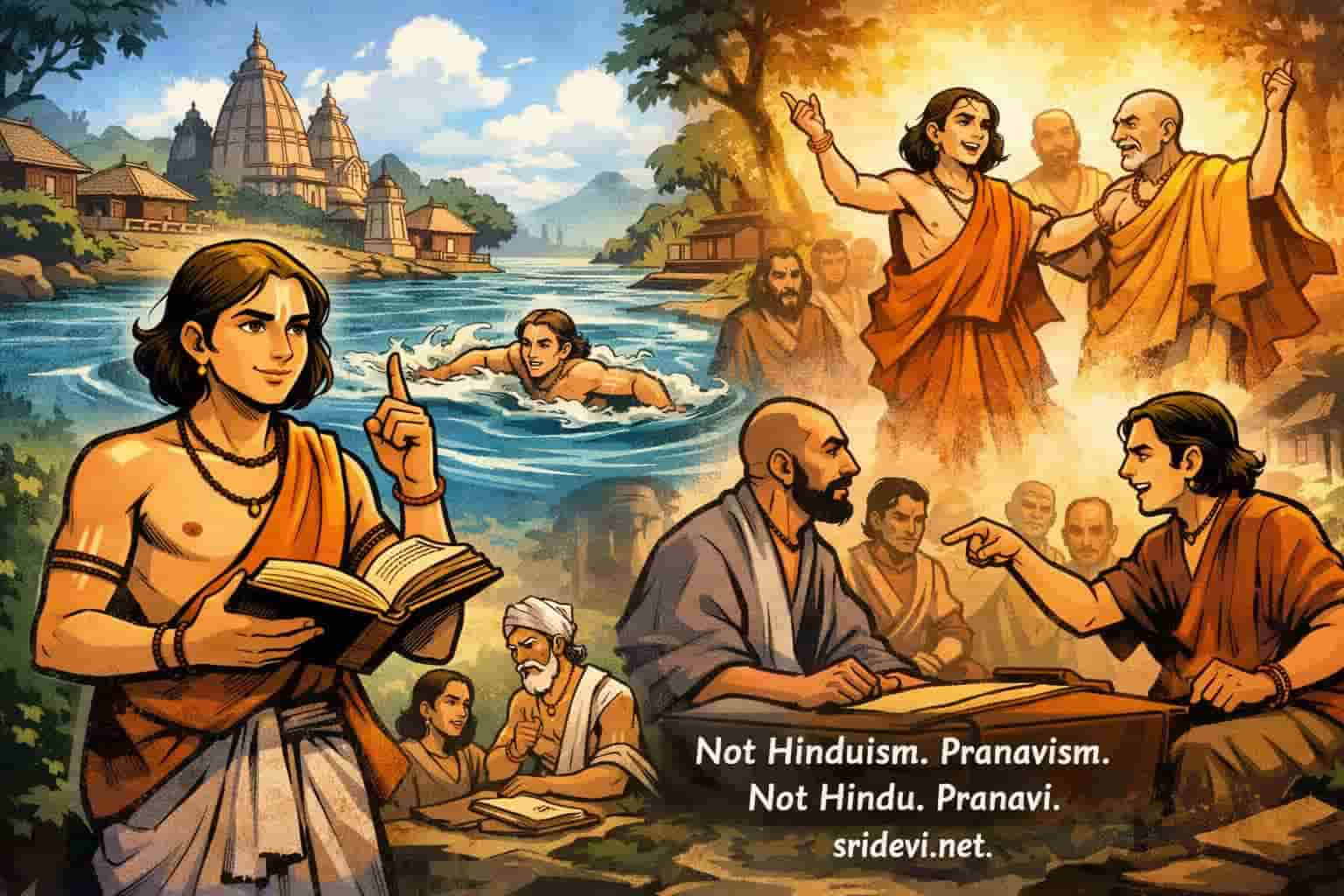
On February 18, 1487 — a full moon day in the lunar month of Phālguna — a radiant boy was born in Navadvīpa, present-day West Bengal (India). His virtuous father, Jagannatha, and pious mother, Sachi, named him Vishvambhara (meaning: “the sustainer of the world”).
In his bustling home, however, the women called him Nimai — “like a neem tree.” Before his birth, Sachi had endured the loss of many daughters; her grief was deep and unrelenting. When Vishvambhara arrived, he was like a healing balm; like a medicinal neem tree.
Time flew swiftly, and Nimai grew into a vibrant, playful boy. The banks of the Ganga River became his playground, where he delighted in swimming against the river’s fierce currents — and, when ashore, he passionately tested his parents’ patience with endless mischief.
Only his elder brother, Vishvarupa, could calm his restless heart, captivating him with tales of Lord Vishnu. Vishvarupa had learned these sacred stories from the revered Advaita Acharya, the family’s spiritual guide and an ardent devotee of Vishnu.
In time, however, Vishvarupa renounced home to become a monk. His departure plunged Jagannatha and Sachi into sorrow. Seeing their anguish, Nimai set aside his pranks. He turned his focus toward study, eager to comfort his grieving parents.
Soon, Nimai excelled in Shastrartha, the art of scriptural debate, astonishing even renowned scholars with quick wit and penetrating intellect.
Yet Jagannatha’s pride in his son was shadowed by fear. “We must stop Nimai’s education,” he declared. “Better he be a simpleton than follow his brother into renunciation.”
Sachi protested softly, “But if he remains uneducated, how will he earn his livelihood?”
“There are countless ways to live,” Jagannatha replied firmly. Then, calling his son over, he commanded, “Nimai, from this day on, you will not pursue your studies.”
Obedient but heartbroken, Nimai abandoned school. The boy loitered with his friends, but Jagannatha refused to let him return to school.
Days drifted by until despair drove Nimai to a hunger strike. Alarmed, Jagannatha relented and allowed him to resume learning under the esteemed Pandit Gangadasa.
Under Gangadasa, Nimai’s brilliance blossomed — but so did his arrogance. He mocked his classmates and quarreled incessantly. Finally, tired of his taunts, an older student challenged him to a public debate.
To everyone’s wonder, Nimai’s victory was effortless. None could match his sharpness, not even the most learned students. Left alone in the silence that follows triumph, he matured — his mischief evaporated like mist in the morning sun.
Jagannatha rejoiced at this change but remained uneasy. One night, a vivid dream shook him — he saw Nimai in the ochre robes of a monk, singing and dancing beside Advaita Acharya.
“I hope at least this son will stay home, marry, and live with us,” he told his wife anxiously.
Sachi tried to soothe him. “Where will our son sing and dance? His only love is his books.”
But destiny took its turn. Not long after the dream, Jagannatha passed away. Sachi’s grief converted into extreme attachment. She clung to her son, fearful of losing him — upsetting Nimai in the process.
Without Jagannatha, the household fell into hardship, with little food to spare. Then, to Sachi’s astonishment, Nimai began returning home each day with gold coins.
She became anxious and suspected foul play. But Nimai reassured her — his earnings were honest, though his source he left unexplained. Using his money, he even continued his studies with Gangadasa.
With time, the young scholar Nimai became the talk of the town. He shone with such rare brilliance that people turned to look as he passed, drawn by his luminous presence.
None could rival his mastery of scripture. He presided over gatherings of scholars, enthralling them with his daring interpretations and razor-sharp logic.
Alas, worldly success turned him back into an unacceptably haughty person.