Sri Chaitanya Mahaprabhu — 2
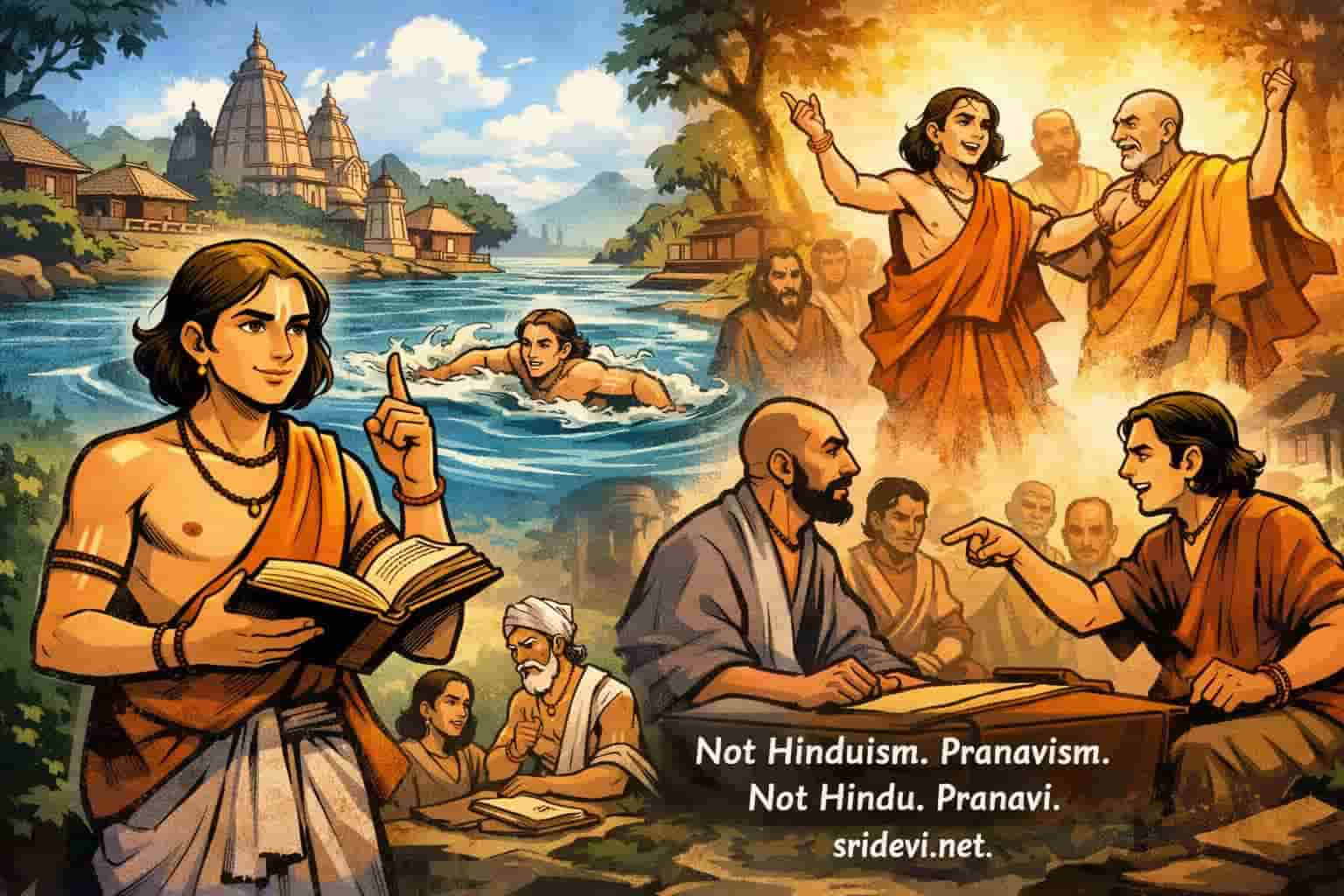
At the height of his fame and in the full bloom of youth, Nimai chanced upon a radiant maiden on the banks of the Ganga River. She shone with a gentle grace and acknowledged his presence with a shy bow. That one glance stirred a flame within his heart that no reason could quench.
That very day, a matchmaker visited Sachi with news of a prospective bride. “She is the daughter of a renowned scholar,” he said eagerly. “A girl as beautiful as Goddess Lakshmi.”
Sachi, however, appeared indifferent. “Let my son study a little longer,” she replied, concealing that Nimai had dismissed all talk of marriage.
Disheartened, the matchmaker departed — only to meet Nimai on the street.
“Did you visit my home?” Nimai asked.
“Yes,” the man sighed, “but your mother refused the proposal.”
A knowing smile crossed Nimai’s face. He rushed home and teased his mother, “What did you not like about the matchmaker’s words?” His eyes gleamed with mischief.
Catching his hint, Sachi’s heart danced with joy. Without delay, she arranged the match between her son and Lakshmi Priya, the same maiden who had captured his heart that morning.
Soon, amidst festivity and music, Nimai wed Lakshmi Priya.
In time, Sachi came to adore her gentle and devoted daughter-in-law. And Nimai — endowed with wisdom, wealth, and acclaim — moved through life as though he were the very lord of the three worlds.
Not long after, a saintly traveler arrived in Navadvīpa. His deep devotion to Sri Krishna had drawn this person to Advaita Acharya’s home.
“My son, who are you?” Advaita Acharya enquired.
“I have come to worship your feet,” the traveler said humbly, folding his hands.
As they spoke, a hymn to Krishna drifted through the air, filling the saint’s eyes with tears of devotion. At once, Advaita Acharya recognized him as Ishvara Puri, the illustrious yet humble devotee of the Lord.
By serendipity, Nimai arrived uninvited and crossed paths with Ishvara Puri. Captivated by the saint’s gentleness and love, Nimai listened as Puri said softly, “Sri Krishna wants nothing but the love of His devotees. With love, He accepts every prayer equally.”
Nimai bowed deeply, moved by his words, yet his conduct in the world remained unchanged. Though generous with food, clothing, and charity, his pride continued to tower like a mountain.
Meanwhile, Lakshmi Priya continued to be the very image of devotion. She kept the home immaculate and cared tenderly for her family. She often massaged Nimai’s feet as he drifted to sleep and never allowed Sachi to lift a finger, ensuring the elder woman lived in comfort.
But Nimai, lost in study and renown, rarely expressed affection. Lakshmi Priya’s heart ached in silence; her sadness went unseen.
And then, one day, Nimai abruptly announced his plan to journey across the land to challenge scholars in debate. The voyage stretched endlessly. His fame spread, his riches multiplied, and people thronged wherever he went.
In Navadvīpa, though, Lakshmi Priya withered in grief. Depressed, she stopped eating and caring for herself, yet she continued serving Sachi without complaint.
At last, unable to bear the pain of separation, she walked to the banks of the Ganga River — and never returned.
When Nimai finally came home, garlanded with glory almost a year later, he went first to bathe in the sacred river, laughing and jesting with his friends. Returning home, he found Sachi pale and trembling as she served him food.
“Mother, why are you so distressed?” he asked. “Are you not happy to see me?”
Sachi could not speak. Tears streamed down her face. Alarmed, Nimai whispered, “Something has happened to your daughter-in-law?”
“She has gone into the Ganga,” Sachi answered between her sobs.
Nimai’s heart broke. He wept bitterly, the weight of loss crushing his pride.
Then, in a moment of profound detachment, he said softly, “All relationships are but illusions. Lakshmi Priya was pure and devoted. She has reached the Divine before me.”
Lakshmi Priya’s Demise: Theories
Since many early storytellers chose to veil the episode of Lakshmi Priyas’s passing, little authentic information remains today. Over the centuries, various theories have emerged.
- The Vow of Renunciation: A few scholars suggest that Nimai had expressed his intention to take monkhood soon after returning from his scholarly journey. The thought of such separation, they say, may have profoundly affected his wife and led to her untimely demise.
- The Serpent Legend: Some later accounts claim that a snake bite caused her death. However, no primary text supports this version. Most traditional writers interpret it symbolically or reject it altogether, maintaining that her death was self-inflicted.
- The Weight of Loneliness: Several respected sources describe how Lakshmi Priya fell into despair during Nimai’s extended absence — her sense of rejection and isolation intensified into depression. Modern science confirms that such sorrow could trigger suicidal tendencies.
- The Pain of Barrenness: A few mention that she had not conceived even after years of marriage. The resulting grief and social pressure deepened her melancholy, hastening her decline.
Whatever the outer cause, the event became the silent axis upon which Nimai’s life turned — from pride and worldly brilliance toward surrender, devotion, and awakening.
Author’s Note: No Human is Almighty!
Many storytellers downplay this Lakshmi Priya episode, yet this is vital to acknowledge; because it honors a woman who became the unseen ladder upon which a sage rose.
None in human form, not even the greatest of the great saints, is Almighty Perfect. To believe otherwise is but an expression of ignorance and human ego.
Every soul errs, learns, and evolves.
That is why every saint meets a turning point; for Nimai, it was the loss of his beloved wife. To conceal such moments is to diminish the grandeur of the Divine Līlā — the cosmic play of life — and to withhold the very human lessons it subtly seeks to bestow.