The Deep-Rooted Conditioning
When I was working as a life coach, I kept hearing the same frustrated line from people, in different languages and accents:
“My parents aren’t changing.”
“My spouse isn’t changing.”
“My friends aren’t changing.”
What they were really saying was: Those around me refuse to see the world the way I do.
Often, we don’t just want people to change their behavior — we want them to change everything about themselves: their beliefs, their worldview, their way of thinking. And when they don’t, we label them stubborn, rebellious, closed-minded, or outdated.
But here are the uncomfortable questions: Have you ever paused to examine yourself? Have you ever wondered whether you are just as conditioned as those you judge?
An Eyebrow-Raise Moment
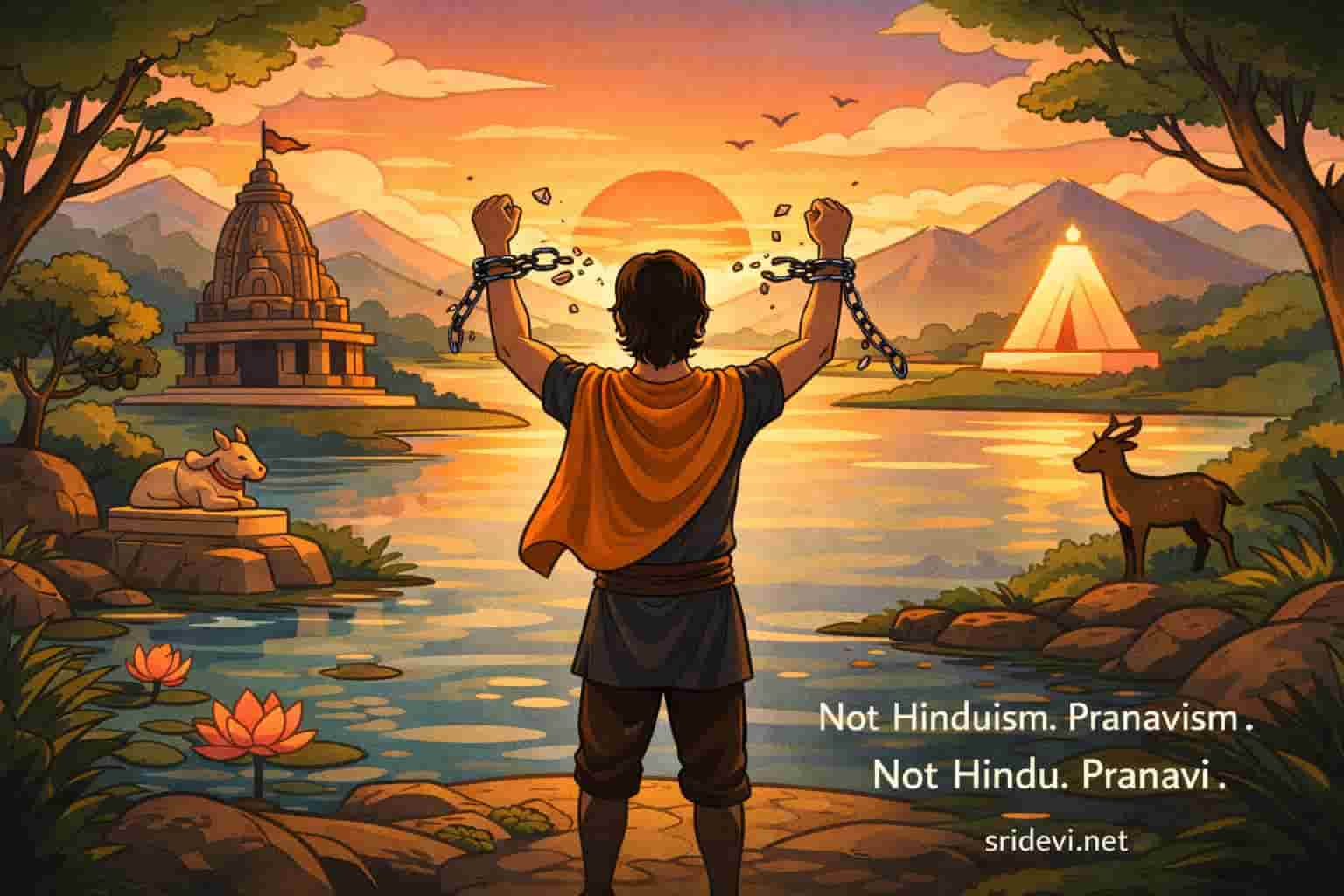
At some point in my own journey, I decided to give a name to the faith I follow. I called it Pranavism, and I had my reasons — which I shared candidly.
But here’s the real question: would you accept that name?
Be honest. Some of you might’ve raised an eyebrow. Some might’ve quietly judged. A few might’ve felt tempted to cut ties with me, labeled me eccentric, or dismissed me as having “lost it.”
That reaction — right there — is conditioning.
When something doesn’t fit into the “boxes” we’ve grown up with, our first instinct is rarely curiosity. It’s discomfort. And from that discomfort, judgment is born.
We don’t ever ask, “Why does this make me uneasy?”
We jump straight to, “This must be wrong.”
The Borrowed Certainty
Conditioning is what happens when an idea is planted in us and repeated often. So often that it eventually becomes accepted as truth, many times without our ever checking where it came from.
Over time, the idea hardens. It becomes part of our identity. We don’t just believe it; we start defending it. And then argue about it. Even worse, we feel threatened when someone dares to challenge it.
Most of the time, this happens because we don’t slow down to think. We rarely ask ourselves: Is there some truth in what they’re saying? What is my objective view? And which part of it was inherited?
Certainty feels powerful, but this “borrowed certainty” is fragile — it can break at the very first honest blow.
Who named it?
Take religion, for instance.
- Hinduism, as a term, comes from the Indus Valley region.
- The Vedic texts may have been composed earlier, but they were written down much later.
- Sanatana Dharma, as an umbrella term, was articulated centuries after those traditions had already existed and were evolving.
So here’s a simple question: What faith existed before all these labels?
Most of us don’t know. And yet, we speak with certainty. We judge with confidence and finalize opinions with authority. Not because we’ve studied the scriptures deeply, but because we’ve been trained to think and feel a certain way.
A Gentle Challenge
To test your own conditioning, here is my quiet challenge to you:
- Can you name your religion without leaning on ancient labels?
- Can you explain your faith, values, or worldview sans what you were told?
- Can you listen to someone who thinks differently from you without needing to fix, correct, or judge them?
If you can, that’s growth. If you can’t, it means there’s still more spiritual evolution to come.
Until you examine your conditioning, it’s best not to call others confused, lost, or cuckoo; simply because they dared to step outside the boxes we never realized we were living in.
And maybe the wisest place to stand, before judging any saint, seeker, or so-called oddball, is this: Let me first check and grasp the roots of my own faith.