The Historic Misunderstanding
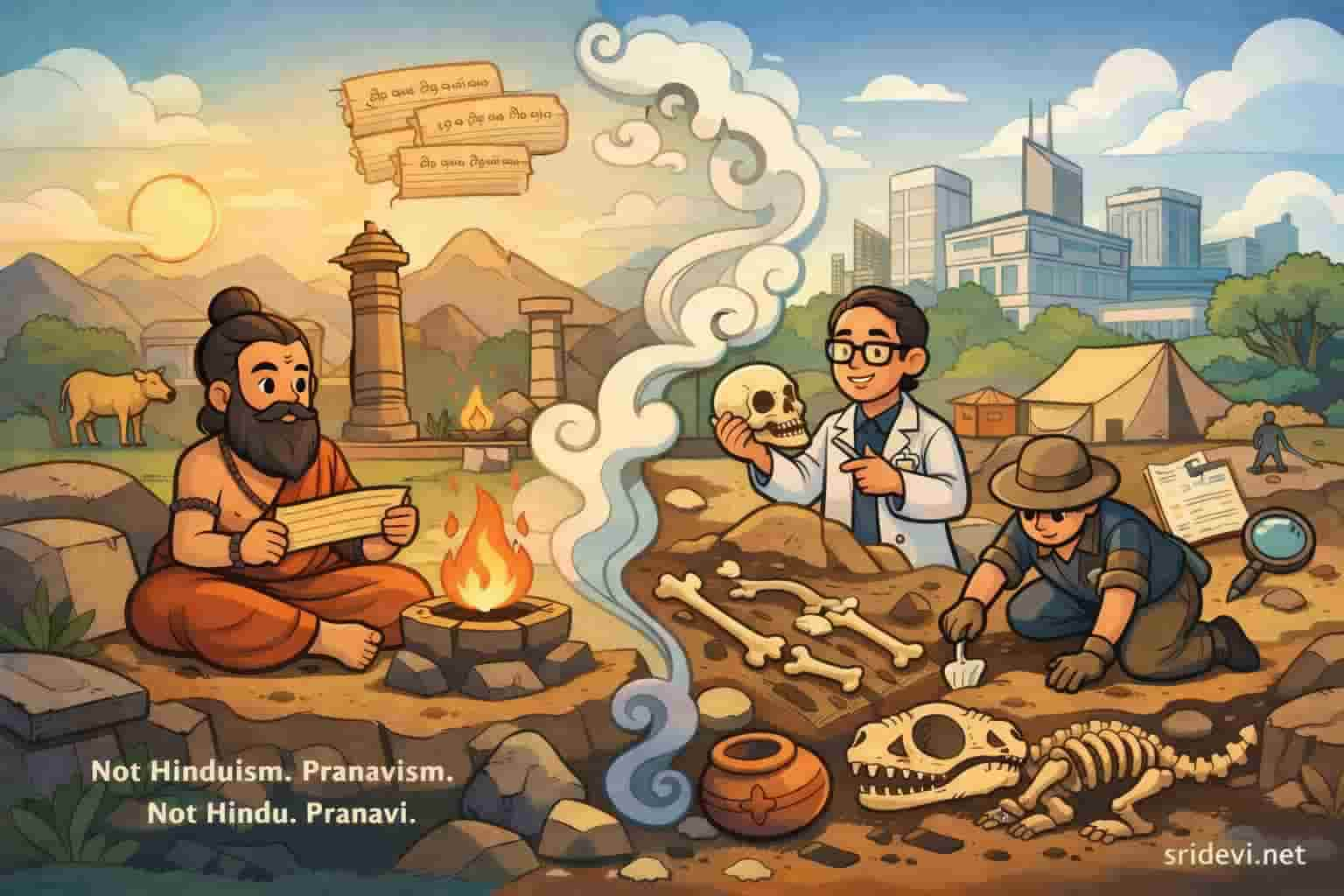
Non-Indian scientist: “There is no history before ~3000 BCE, give or take a few centuries.”
Indian-origin religious soul: “How can you say that when our Vedic literature clearly shows it?”
Non-Indian scientist: “But that’s not history.”
Indian-origin religious soul: “So you’re saying we have no history?”
At this point, I either cringe or laugh at these debates on YouTube. Why? Because both sides are technically right — they’re just using different definitions and assuming bad intent.
What “History” Means
In academia, the general consensus is that “history” starts when there is a written record that can be dated and verified. Everything before that is called prehistory.
So when a non-Indian scientist says there is no history before the Indus Valley Civilization (~3000 BCE), they are not saying humans didn’t exist before that.
Instead, they’re saying: there are no written records from before that period that can be formally placed into the category of “history.” That’s just how the academic definition works.
When an Indian-origin religious person pushes back, what they usually mean is: “We clearly have ancestry and oral tradition before this.” That is also true.
But in academic terms, that falls under prehistory, not “history.” So one side is using a technical definition. The other side hears it as an insult. And the argument goes nowhere.
The Fight Continues
Here’s another version of the same misunderstanding –
Non-Indian scientist: “There are no human fossils found in India from the Pleistocene.”
Indian-origin religious soul: “You can’t find fossils, and now you’re blaming us for having no evidence.”
Non-Indian scientist: “That’s not what I said. There is a Neogene fossil record in India, but no Pleistocene human fossil record.”
Indian-origin religious soul: “You’re just using big words to say there were no humans here.”
Non-Indian scientist: “We never said there were no humans–we find stone tools. But without fossils, it can’t be formally placed in academic prehistory the same way.”
Again, Both Are Right
The religious/cultural side is saying: we have prehistory, ancestry, and oral tradition. How can you deny it?
The scientific side is saying: Oral traditions exist everywhere in the world. They are respected as part of regional prehistory. But they can’t be taught as formal academic prehistory without material evidence, such as fossils.
This isn’t erasing a culture. It is just how academic classification works.
Now, the Science Part
Scientists aren’t claiming Indians magically appeared without ancestors.
The current consensus (not 100% certain, but widely accepted) is that during the Pleistocene Epoch, the Indian subcontinent experienced:
- Strong monsoon intensification
- High tectonic activity (movement of land)
- Acidic soil conditions
All of this makes fossil preservation extremely difficult. So fossils decayed, dissolved, or were destroyed over time.
Unfortunately, this poses a problem for Indian prehistory. Because the Pleistocene Epoch is when most ape-to-human evolution occurred.
But this isn’t political; it is geology and climate.
The Takeaway
So when someone in academia talks about:
- History
- Official prehistory
- Fossil records
- Pleistocene / Neogene
- Archaeological evidence
They are not saying Indians have no ancestry. They are saying there is no physical evidence yet to place this in the academic timeline.
That doesn’t mean regional prehistory or oral tradition can’t be taught to the people it matters to. You can still honor lineage, memory, and cultural continuity.
Different frameworks. Same story. Yet, we keep arguing because we think everyone is using the same language — when we clearly are not.