The Kalki Mandala: My Insight
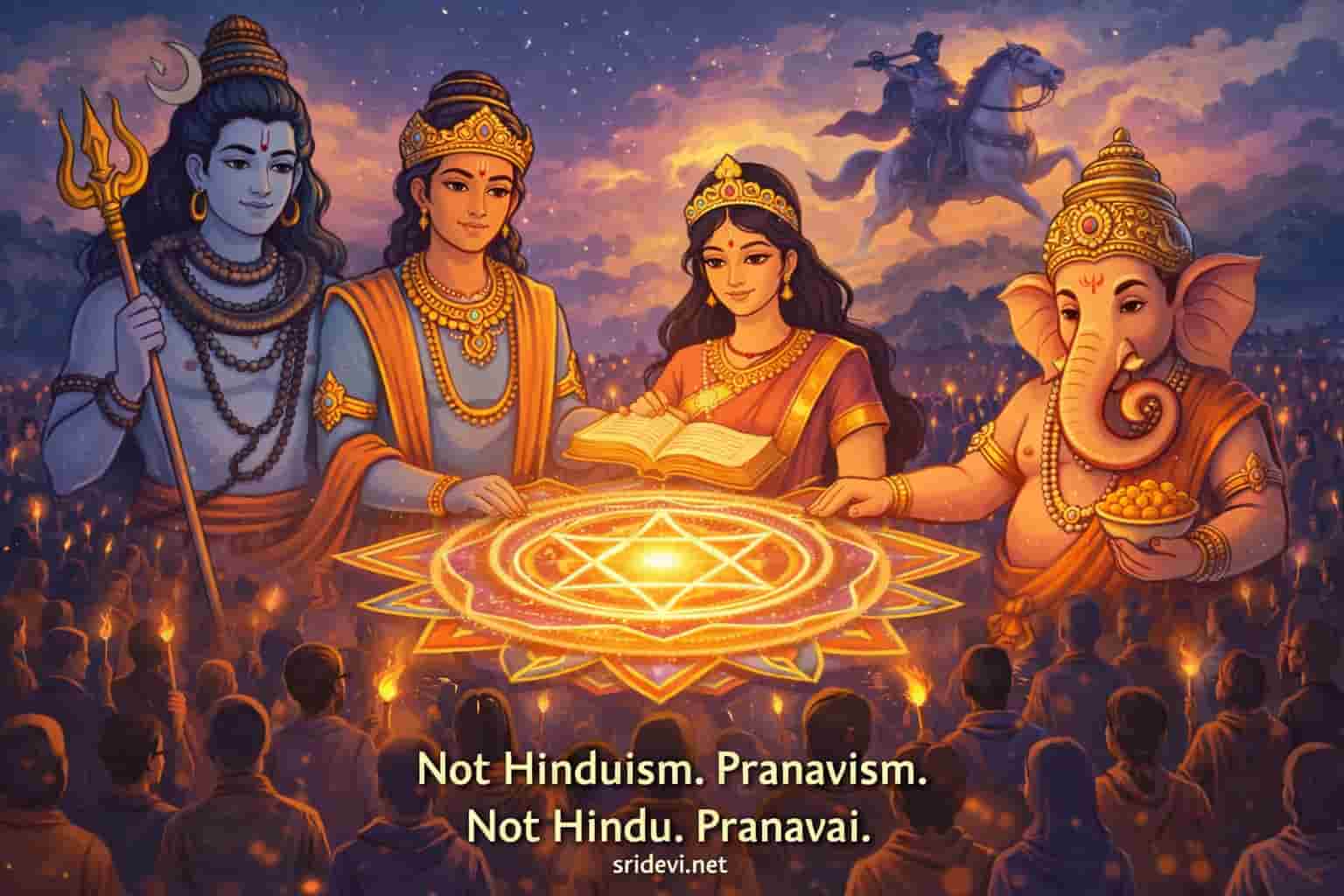
This is not from any scripture. It is not a hidden Puranic reference, nor is it a decoded prophecy. This is simply what arose in my meditation — an insight that changed how I see the Kalki avatar.
Why Is the Prediction So Vague?
For something so significant, the description of Kalki is surprisingly flexible.
- Shambhala
- Vishnu-Yash
- Su-Mati
- White horse
- Gyaan Avatar
Enough detail to speculate, but not enough to confirm. What if this vagueness is intentional?
Because Kalki is not — and cannot be — one person.
The Evolution of Avatar
If we observe the Dasavatar of Vishnu, we see progression. From aquatic life… to amphibian… to animal… to half-animal, half-human… to fully human… to divine human.
It is well known that Krishna was a Purna Avatar — divinity in its complete form.
What can follow completeness?
Formlessness.
If Kalki is described as a Gyaan Avatar, an embodiment of wisdom, then the next stage would not be limited to one body.
It would be Collective Consciousness.
The Horse With Four Legs
Kalki is shown riding a white horse. Why this emphasis on the horse? Why the four legs?
In meditation, what arose was this:
The horse is not transport; it is a structure.
Four legs represent four anchors — a mandala.
The one seated upon the horse denotes commandership — another word for leadership. The four sides of the mandala.
And the imagery does not show a lone rider. It shows an army. So Kalki is not an individual arrival, but a collective awakening.
Which may explain why so many are searching for “the” Kalki.
This is a full mandala of collective reform.
The Four Anchors
So who are these four anchors — these leaders of the mandala? Here is what my insight suggests, based on the prophecy:
- Vishnu-Yash
- Su-Mati
- Son of Vishnu-Yash
Interpreted literally, we would search for one person. Interpreted symbolically, something deeper emerges.
Vishnu-Yash
→ Yash is a popular name of Rudra Shiva.
→ Vishnu is the revered Vishnu Deva.
Su-Mati
→ Pure mind or refined intellect.
→ This is how scriptures define Devi.
Son of Vishnu-Yash and Su-Mati.
→ This points to Ganesha.
→ Son of Devi.
→ Born of Shiva.
→ Described as Vishnu’s essence.
Shiva. Vishnu. Devi. Ganesha.
Four anchors. Again, a mandala.
The Army of Wisdom
Scripture speaks of destruction. But perhaps destruction does not always mean bloodshed.
Sometimes it means:
- Dismantling corruption.
- Dismantling ego-driven spirituality.
- Dismantling blind belief.
- Dismantling fanatic faith.
If Kalki is a Gyaan Avatar, then the weapon is not a sword.
It is clarity. And clarity spreads through people — not through one person seated on a throne.
This Is Not Scriptural
Let me be clear again: this is not scriptural. It is what arose in my meditation.
This is insight. And insight is always personal.
But if there is even a fragment of truth in it — and it appears there is, given how spirituality has taken the online world by storm — then Kalki is not someone we passively wait for.
It is something we consciously become part of.
The Collective Call
In my first post, I showed how easily prophecy can be twisted. In my second, I spoke of the burden of divinity.
Here is the third: Kalki is not a person. Not a spiritual kingdom. But a spiritual collaboration. Not a throne — but a network.
Whether you are an anchor of the Kalki Mandala or not, you are still God’s chosen. Because every wisdom-soldier matters.
Thinkers.
Creators.
Reformers.
Every voice of clarity.
We are not waiting for The Kalki. We are being invited to rise — as a collective force of the Kalki army.
But, before we can build a Shambhala, a spiritual paradise, we must first spiritualize ourselves.