To Me, Faith Isn’t Structure
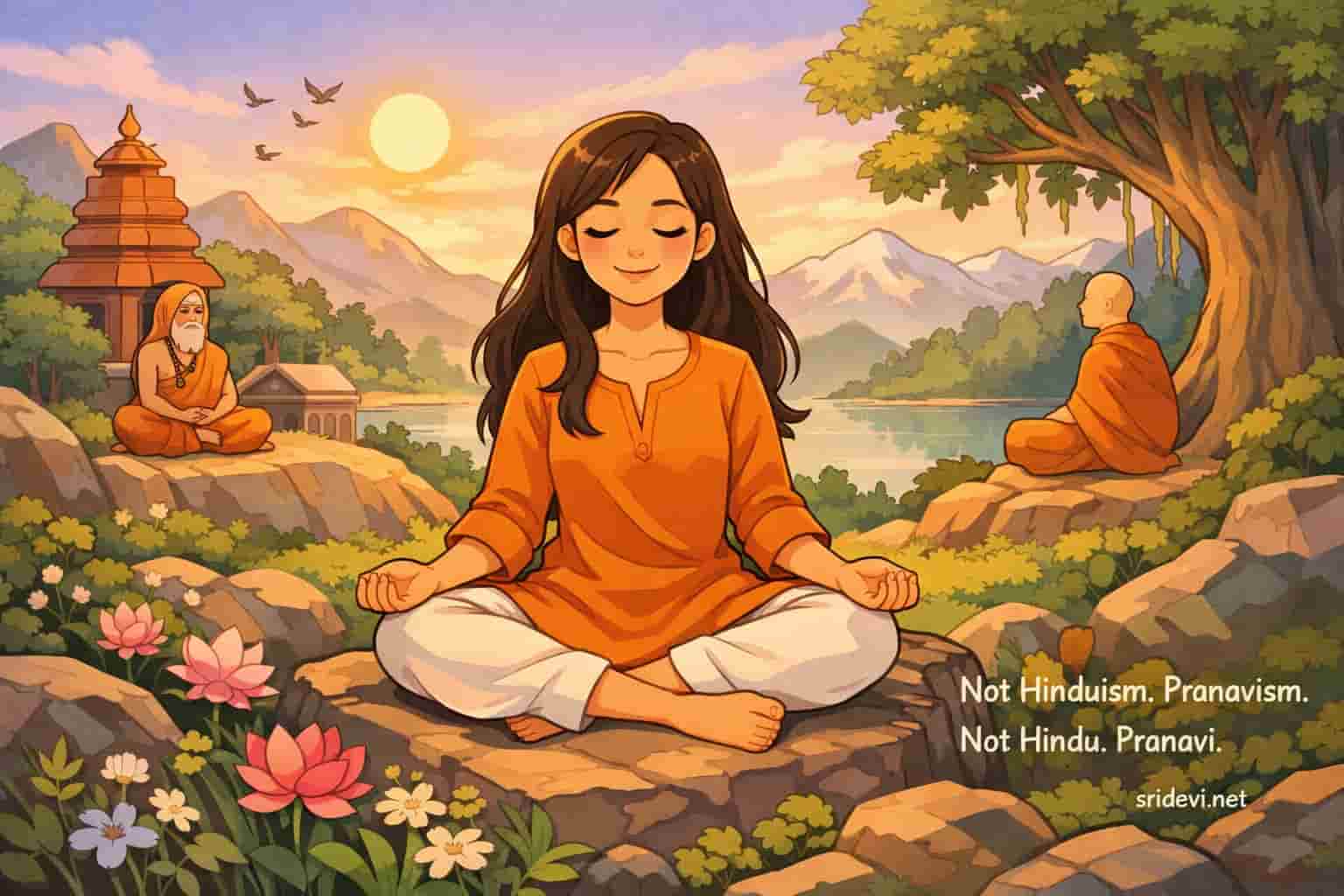
People often use the term Sanatana Dharma and link it to philosophical and institutional structures shaped by sages such as Adi Shankara-Acharya.
I respect those sages deeply, and also the traditions that emerged around them. These are paths that have been followed for centuries, and they clearly work for many people.
But they didn’t work for me.
👉 They made me more confrontational and less peaceful.
A Template Way of Life
Hinduism is often described as a “way of life.”
That has some flexibility, but it is still structured. A way of life comes with templates — how one should live, practice, and belong to a community.
It felt more like a lifestyle package that made me follow something, rather than listen to myself. For me, that didn’t work either.
👉 It made me conform to social norms rather than enrich my inner life.
What Faith Means to Me
Faith to me is simple: follow what gives you inner peace, while taking responsibility for your life in the world. This means:
- I will abide by the law of the land.
- I will hold myself to basic ethics.
- And I will practice discipline.
But the form of that discipline is not something I borrow as-is from any canned tradition. It is something I choose and customize mindfully.
That is what Pranavism means to me. It is not a new religion, and it is not an invitation for anyone to convert.
It is simply a name I use for my own inner orientation — live life as it feels right to me.
As simple as that.
This Isn’t About Disrespect
This is not a rejection of sages. And it isn’t hostility toward any tradition.
The prevalent paths have helped many for centuries and may continue to do so. Who am I to contest the greatest of greats?
Yet, these paths — which have become institutionalized faiths — no longer felt like living insights to me. Besides, if a path works for someone, it doesn’t mean it works for others.
Let’s just say my choice is different.
And difference is simply that — difference, not disrespect.