Using AI Responsibly
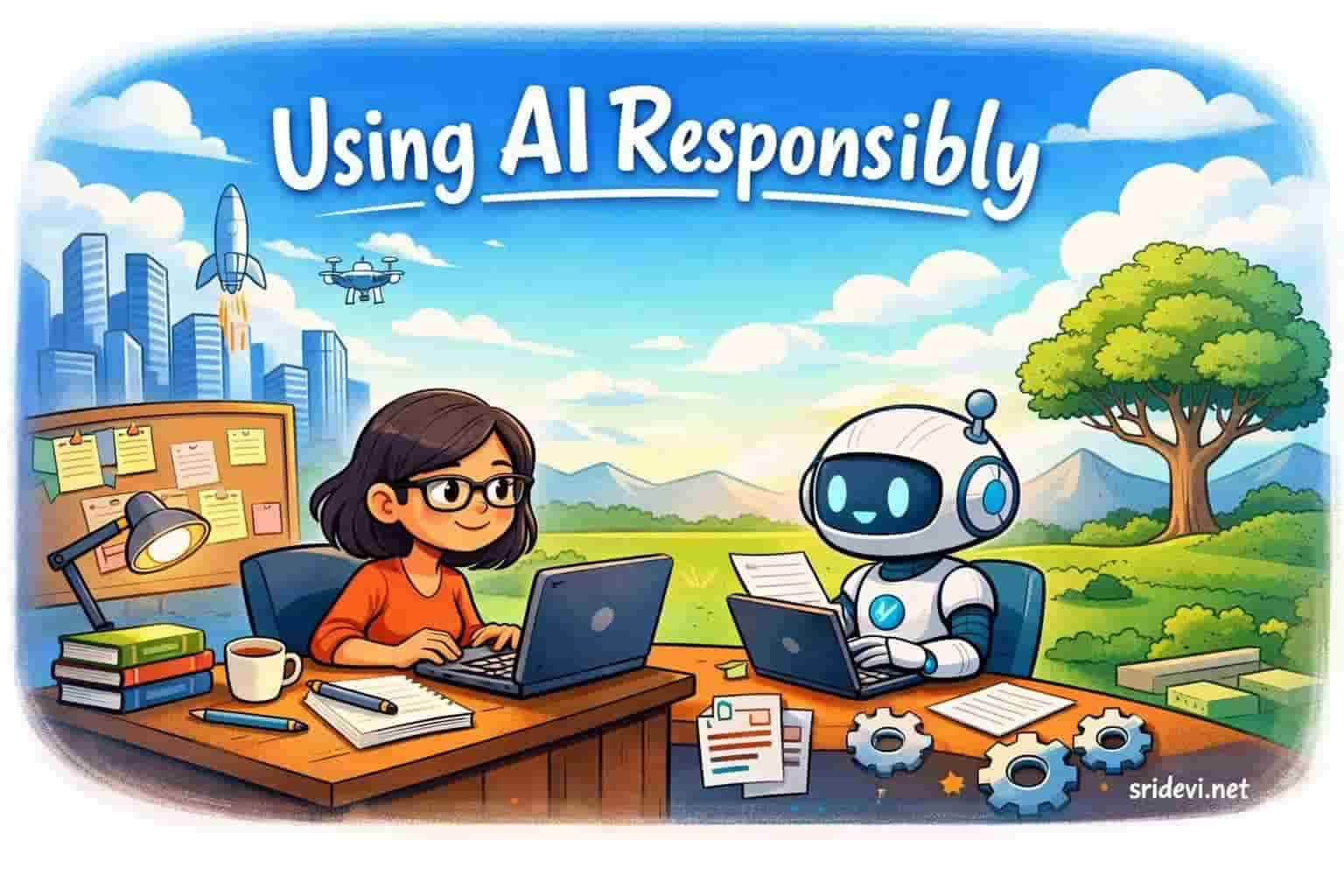
Is it okay to use AI to write — or to do anything else?
This question, to me, is like asking, “Is it okay to type your book instead of handwriting it?”
My writing process–
Earlier, it took me about 1.5–2 hours to write a post: research, rough draft, fair draft, and editing. The fair draft took the longest — cleaning up, cleaning up again, fixing typos, polishing grammar, and so on.
Now, I write the same post in about 30 minutes with AI. I still do my own research (AI is notorious for getting facts wrong). And I still write the rough draft and a workable draft. From there, I let AI help with the fair draft.
Then, I completely rewrite every line of the post to ensure the style and voice are mine. I do the final edit myself — I want the content to feel like me. And I’ve installed an AI grammar tool to catch typos and basic errors.
P.S. It’s my natural writing style to use partial sentences. I might’ve invented them before AI did. These days, AI keeps asking me to “fix” them, and I refuse. Deliberately, with pleasure.
So why even use AI?
Because if you don’t, you’ll be left behind. Technology keeps evolving, and we either grow with it — or we fall behind. Those are truly the only choices we have.
If you don’t adapt, you’ll write one post while your peers write two or three a day. You’ll take four months to finish a book, while others finish in one month by using AI as leverage.
Here’s an eye-opening anecdote I came across:
A tech company asked candidates to code during interviews. Some used AI. Others didn’t. The company hired those who used AI because they would be more productive.
Of course, the company also tested their actual understanding to ensure the hires knew the concepts and weren’t just blindly generating code.
That pretty much sums up how AI should be used: Use it to accelerate your work — but don’t outsource your thinking.
What about AI taking over jobs?
Yes, AI will take away jobs. That’s the sad part. But so did every major invention; some more than others. The solution, though, isn’t to reject technology; it is to regulate it.
As the Srimad Bhagavad Gita would echo: we personally can’t control the direction technology takes, but we can control how we respond to it.
Upgrade your skills to match your times and remain relevant. But don’t downgrade your individuality and your thinking. To me, that’s what smart, sincere, hard work looks like.
Finally, what about ethics?
Using technology itself says nothing about your ethics. How you use technology — and how transparent you are about it — says everything about your ethics.
And this is me being transparent and ethical:
Do I use AI to enhance my work?
Yes, of course. If I don’t, I won’t stay current — putting it differently, I’ll become archaic.
Do I let AI take over my brain, ethics, ideas, and skills?
Absolutely not. Not in my wildest dreams.