Why I Hope My Son Isn’t Kalki
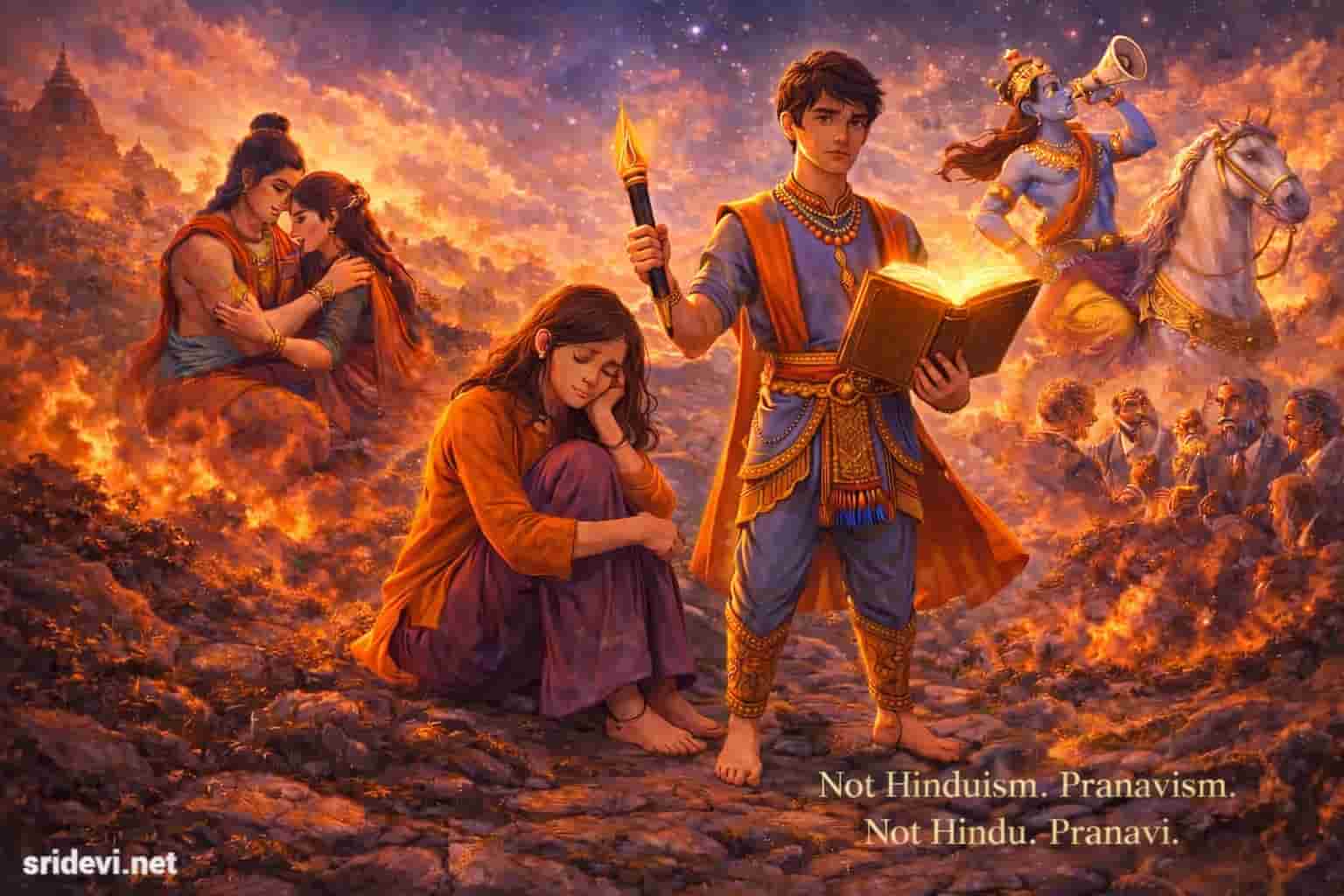
In an earlier post, I “proved” that my son is Kalki. It was satire. A demonstration of how easily prophecy can be interpreted to suit one’s narrative.
But here is the part that is not satire:
I genuinely hope he is not Kalki — even in the remotest possibility.
Not because I doubt scripture. And not because I reject the idea of avatars. But because we, as a society, deeply misunderstand what that role entails.
Avatar Isn’t Power
Somewhere along the way, we began equating divinity with status and power: a title, a spiritual kingdom.
If someone sits on a throne, announces they are Kalki, and expects people to fall at their feet, that — in my humble opinion — is the clearest sign that they are not Kalki.
The human ego sees everything in terms of power. It seeks recognition and authority.
But an avatar is not a position of comfort. It is a position of responsibility. And a Vishnu-scale responsibility is never glamorous.
Look at Rama and Krishna
Today, we worship Rama and Krishna as gods. Yet when they walked this planet, their lives were anything but easy.
Rama endured exile, separation from his wife, war, and the endless burden of kingship. Krishna experienced separation from his parents, political manipulation, warfare, and the destruction of entire lineages.
Yes, their presence alleviated society’s suffering, but only after they paid a heavy price.
Think about it — if Kalki were to arrive, why would that life be easier?
Restoration Is Work
Scriptures describe Kalki as the one who restores Dharma, through a massive wipeout of some sort.
We are not talking about online debates or spiritual marketing. We are talking about correcting corrupt systems and dismantling the spiritual imbalance.
That would mean:
- Difficult decisions.
- Resistance from current powers.
- Uncomfortable truths that nobody wants to hear.
That is not a life of ease. It is a life of sacrifice.
A Mother’s Perspective
No mother willingly wishes hardship for her child. Even if that hardship is divine; even if the world later worships her child. For, it is she who must watch him struggle.
- Rama’s mother, Kaushalya, wept.
- Krishna’s mother, Devaki, shed tears of blood.
- Krishna’s adoptive mother, Yashoda, longed for one vision of him after he left her.
An avatar’s life, if history teaches us anything, is not privileged. It is a sacrifice; a massive one. I would not wish such an exile for my son. Not for divine glory. Not for reverence.
How Would You Recognize?
A divine avatar’s journey would not look like power; definitely not as we define it. It would look like work — difficult, transformative, never-ending work. Endurance of pain. And relentless struggles.
If my son were Kalki, perhaps many lives would be elevated through him. But his life — and mine — would likely be filled with tears.
And that is not something any mother, even a divine one, casually desires.
P.S. I wrote these posts on Kalki because I see so many online claims that he has already arrived — here or there. Please be cautious and do not trust such claims.